
DIY vs Pro PTO Repair: When to Grab the Tools and When to Call a Pro
Your tractor is ready. The implement is hooked up. You're ready to start your workday, but the PTO won’t engage. Or it does engage, but you hear a new clunk, feel a steady shake, or notice it isn’t running smoothly.
That’s when the decision between DIY vs pro PTO repair becomes important.
Most equipment owners don’t mind basic maintenance. The problem is that PTO systems are one of those areas where a “small” issue can turn into a bigger failure or a safety risk if you guess wrong. Some PTO fixes are realistic DIY jobs, and some are not.
Jonestown Ag Supply helps you sort through these questions and decisions and get the right parts or repair service. They’re a well-stocked hardware and farm supply store with PTO and hydraulic repair capabilities, serving farmers and contractors who can’t afford to be down long.
Keep reading to take a look at what you can do yourself, what you shouldn’t, and how to decide.
Table of Contents






TL;DR — DIY vs Pro PTO Repair
- DIY can make sense for basic PTO maintenance like inspection, greasing, replacing a damaged shield, or a simple part swap you’re sure about.
- If you notice vibration, heat, clunking, repeat shear bolt failures, or missing shields, it’s usually time to call a pro.
- If your shaft has a CV (constant velocity) joint that has wear or is heating up, you will need professional help to repair. CV joints look simple to repair but require special tools and training to take apart and put back together.
- The real cost isn’t just parts: it’s parts + your time + downtime + risk if the fix doesn’t hold.
- When in doubt, get help early—professional PTO repair can prevent bigger damage and get you back to work faster.
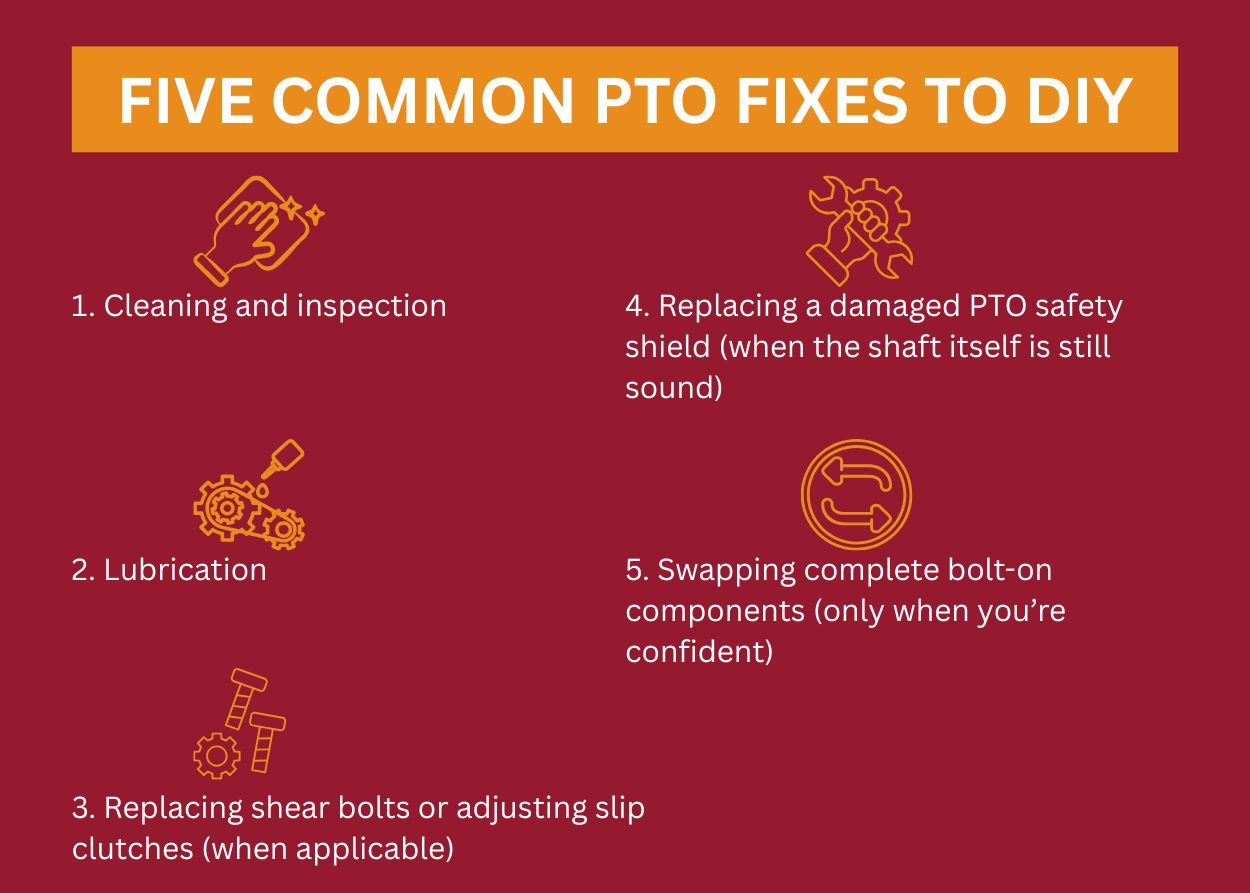
Five common PTO fixes owners try to DIY
Some PTO work is more like routine service than “repair.” If you stay within your limits and follow your equipment manual, these are often reasonable:
- Cleaning and inspection
Remove debris and check for cracked shields, missing chain retainers, and obvious damage.
Look for shiny spots (metal-on-metal contact) and grease that’s turned dark or gritty.
- Lubrication
Grease PTO shaft fittings and joints per the driveline schedule. If you don’t have access to the manufacturer's suggested greasing schedule, a simple formula is to grease joints every other time or every 6 hours of use.
- Replacing shear bolts or adjusting slip clutches (when applicable)
Many implements use shear bolts or slip clutches to protect the driveline. Replacing sheer bolts with the correct bolt grade or adjusting slip clutches to the proper tension according to the instructions in your owner’s manual is often worth trying before seeking professional help.
- Replacing a damaged PTO safety shield (when the shaft itself is still sound)
Shields matter. Multiple safety resources stress keeping tractor and driveline shields in place and working freely. Jonestown Ag Supply stocks some universal shields that are simple for DIYers to handle the replacement.
- Swapping complete bolt-on components (only when you’re confident)
For example: replacing a complete PTO shaft assembly with the correct series, length, and end fittings—if you can identify exactly what you have. If you are not sure what you have, Jonestown Ag Supply publishes a PTO parts reference PDF and offers PTO shaft repair and replacement services—so you don’t have to guess your way through sizes and specs.
Four things you need before you attempt DIY PTO repair
Without the proper tools, skills, and risk assessment, your chance of success in DIY is slim to none. If you’re considering DIY, you need more than “a socket set and confidence.” So what do you actually need?
- The right information
Your tractor and implement manuals.
Correct PTO series/size, joint type, spline count, and required shaft length.
- The right tools
Proper snap ring pliers, torque tools, punches, and safe lifting/support equipment.
A press to push the old cross joint out of the yoke and then to install the new one. This is the one place where 95% of the DIY failures occur. One wrong move can displace a roller bearing in the cap and set you up for certain premature failure.
Disengage PTO, shut off the engine, remove the key, and wait for all motion to stop before approaching. Multiple safety guides repeat this because it prevents the most common “I thought it was stopped” mistakes.
- A realistic sense of risk
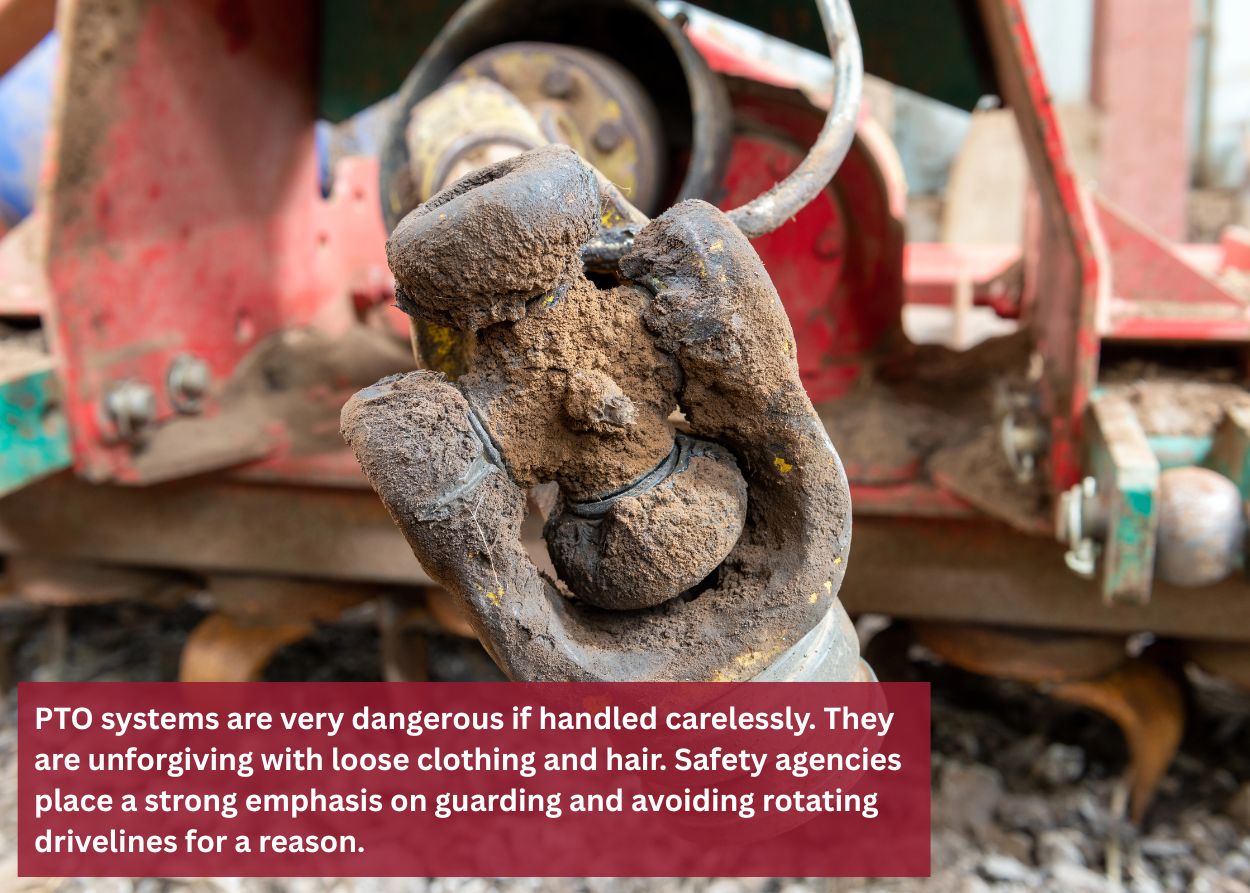
PTO systems are very dangerous if handled carelessly. They are unforgiving with loose clothing and hair. Safety agencies place a strong emphasis on guarding and avoiding rotating drivelines for a reason.
Seven warning signs that PTO repair should be handled by a professional
If you see any of these warning signs, professional repair is usually the safer (and often cheaper) move:
- Vibration or wobble under load
This can point to a bent shaft, worn joints, or alignment issues that eat gearboxes. - Heat, discoloration, or a burning smell
Overheating can mean binding, improper angles, or internal joint failure. - Clunking, knocking, or “jumping” motion
A PTO driveline should run smoothly. Jerky motion is a clue something’s failing. - Repeated shear bolt failures
Repeated failures often indicate a driveline or an upstream implement issue. - Missing, cracked, or seized shields
If shields don’t spin freely or are missing, fix that before anything else. Safety resources consistently stress this. - You need to disassemble joints, press bearings, or rebuild yokes
That’s where fitment, angles, and assembly quality matter a lot. - You are unsure about the correct replacement parts
Wrong PTO parts can create new problems fast.
DIY vs Pro PTO Repair: A Simple Cost and Downtime Comparison
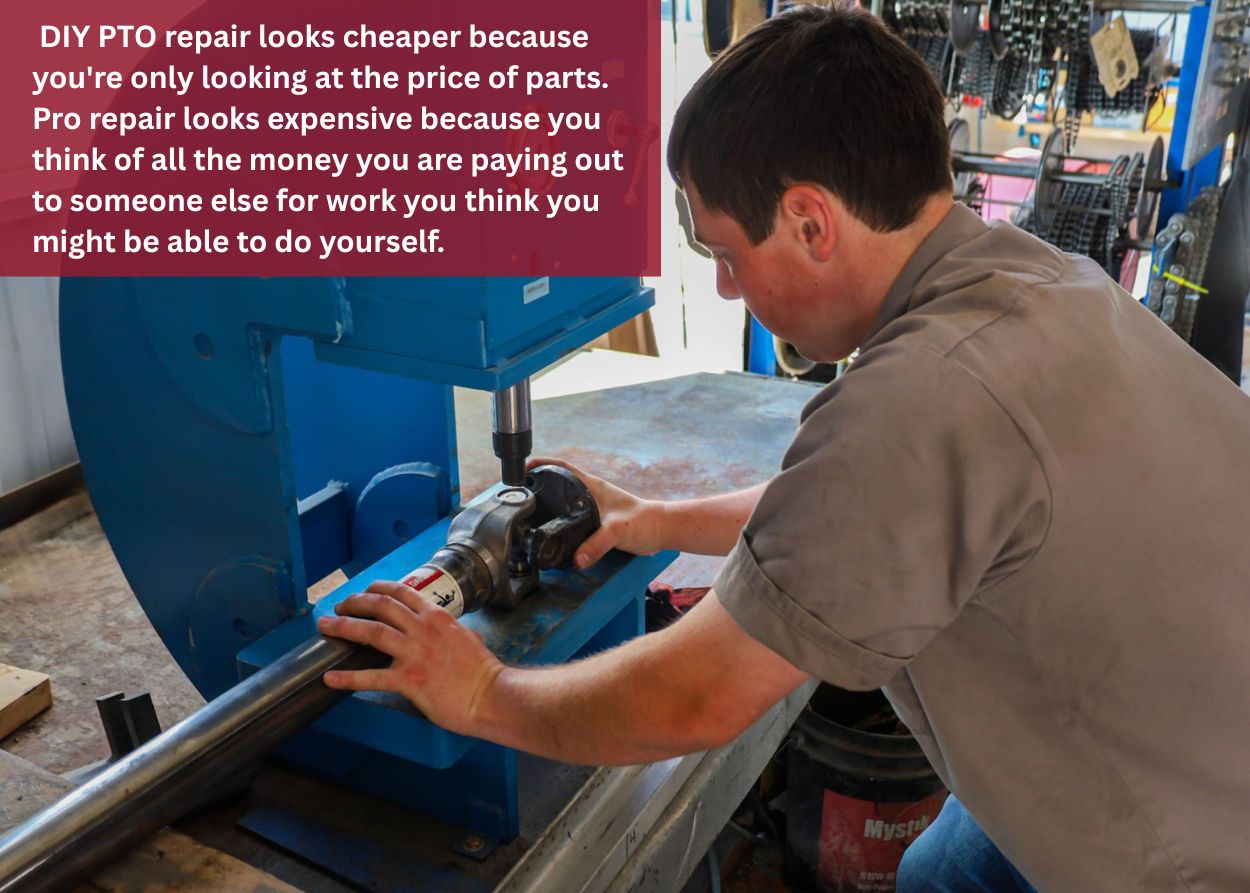
The time your tractor will be down is an important factor when comparing the cost of DIY vs. pro repair. DIY looks cheaper because you're only looking at the price of parts. Pro repair looks expensive because you think of all the money you are paying out to someone else for work you think you might be able to do yourself.
Here are some of the ways that DIY costs more than you think:
- Parts (sometimes bought twice if the first guess is wrong)
- Special tools you may only use once
- Time (including research, teardown, reassembly, and testing)
- Additional downtime if the fix doesn’t hold up, or it takes you longer than a pro
Here’s why a professional repair can be a better deal than it first appears:
- Diagnosis that targets the real problem
- Correct parts the first time
- Quality checks (fit, alignment, shield function, driveline condition)
- Faster return to work, especially when the season is pressing
A PTO driveline is a system. When one part fails, the root cause may be load, angles, missing shielding, or worn components you don’t see at first glance.
Remember, the true cost is actually: Parts + your time + downtime + “what happens if this goes wrong?”
Now, let’s look deeper at when and why you might choose a pro repair.
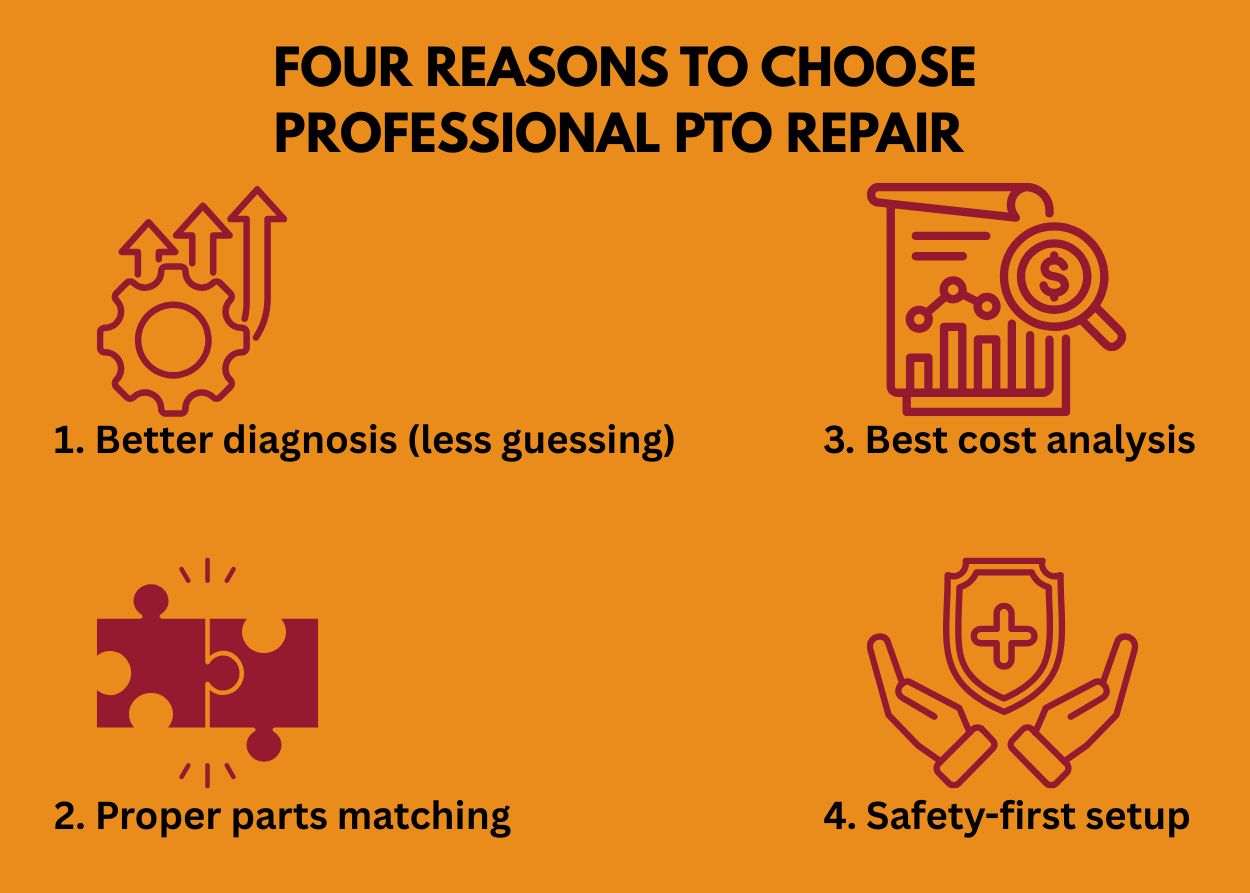
Four ways professional PTO repair improves safety, performance, and longevity
There are several reasons to bring your repair to a qualified shop instead of trying to piece it together yourself.
- Better diagnosis (less guessing)
A shop that works on PTO shafts can spot wear patterns fast and help you avoid replacing good parts while missing the real problem. - Proper parts matching
Correct sizing and fit are everything in PTO components. Jonestown Ag Supply focuses on PTO shaft repair and replacement, and they also provide a PTO parts reference to help match components. - Best cost analysis
An inspection of the whole shaft is important to find all wear that should be addressed. Maybe just one cross failed, but the other one is showing bad wear too. Jonestown Ag focuses on what is the best value for this repair. Sometimes a whole new replacement shaft is a better value than the parts and labor to repair a shaft. - Safety-first setup
Pros are more likely to catch shield issues, missing guards, and other high-risk problems before you head back to the field.
Conclusion: a smarter plan for your next PTO issue
At the end of the day, DIY vs pro PTO repair isn’t really about pride or “how handy you are.” It’s a decision about risk, time, and total cost.
If the issue is basic—inspection, grease, a shield replacement, or a basic swap you can identify with confidence—DIY makes sense.
But if the PTO is shaking, heating up, clunking, or repeatedly breaking shear bolts, it’s usually time to stop and bring in a pro before the damage and downtime get worse.
The goal is simple:
A PTO that starts when it should, runs smoothly under load, and lets you finish the job without stopping every few minutes to troubleshoot.
Here’s a simple next step plan:
- Do a quick inspection (noise, wobble, heat, shielding, obvious wear).
- Handle the true DIY items (cleaning, greasing, basic bolt-on fixes when you’re confident).
- Call in help early when you see red flags—before the damage spreads.
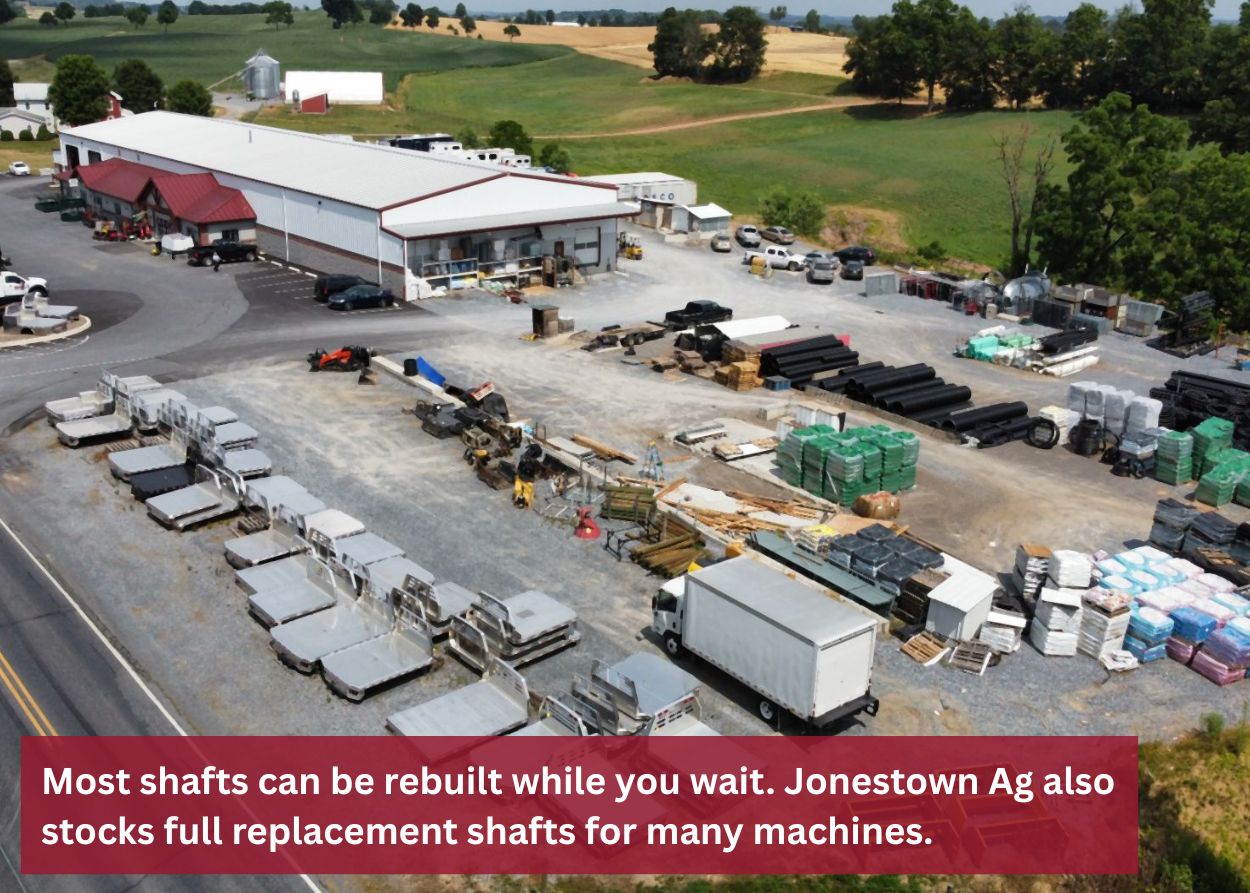
If you’re in southeast or central Pennsylvania, Jonestown Ag Supply is a solid place to start. They’re set up for PTO repairs and parts, and built to help farmers and contractors get back to work with fewer delays. Most shafts can be rebuilt while you wait. Jonestown Ag also stocks full replacement shafts for many machines.
One more reminder:
If there’s any doubt about safety or correct fit, choose the option that gets your equipment running properly and safely—not just running.
To learn more about spotting problems early and keeping your equipment in good shape, take a look at these posts:
