
Signs Your Mini Excavator Needs Repairs
Don’t let the word “mini” fool you—mini excavators work hard. Tight spaces. Muddy fields. Rocky driveways. Demolition and trenching in all kinds of weather.
Wear and tear is guaranteed. Catastrophic failure? That’s optional.
The key is to spot problems early, before a $200 issue becomes a $10,000 breakdown and a week of downtime.
This guide from Jonestown Ag Supply covers the most common signs that your mini excavator needs repairs and what to do when you see them.
Table of Contents








TL;DR — Signs Your Mini Excavator Needs Repairs
- Hydraulic issues: Watch for leaks, slow movements, or overheating, which often indicate problems with seals, hoses, or filters.
- Undercarriage wear: Look for cracks, worn sprockets, or slipping tracks, which can cause costly damage if ignored.
- Engine problems: Hard starting, excessive smoke, or loss of power under load are signs of engine or fuel system issues.
- Electrical malfunctions: Random shutdowns, flickering gauges, or intermittent control failures point to wiring or sensor problems.
- Noises and vibrations: High-pitched whines, grinding sounds, or increased vibrations often signal failing components.
Hydraulic Warning Signs You Can’t Ignore
On a mini excavator, hydraulics are everything. No healthy hydraulics = no digging, lifting, or swinging.
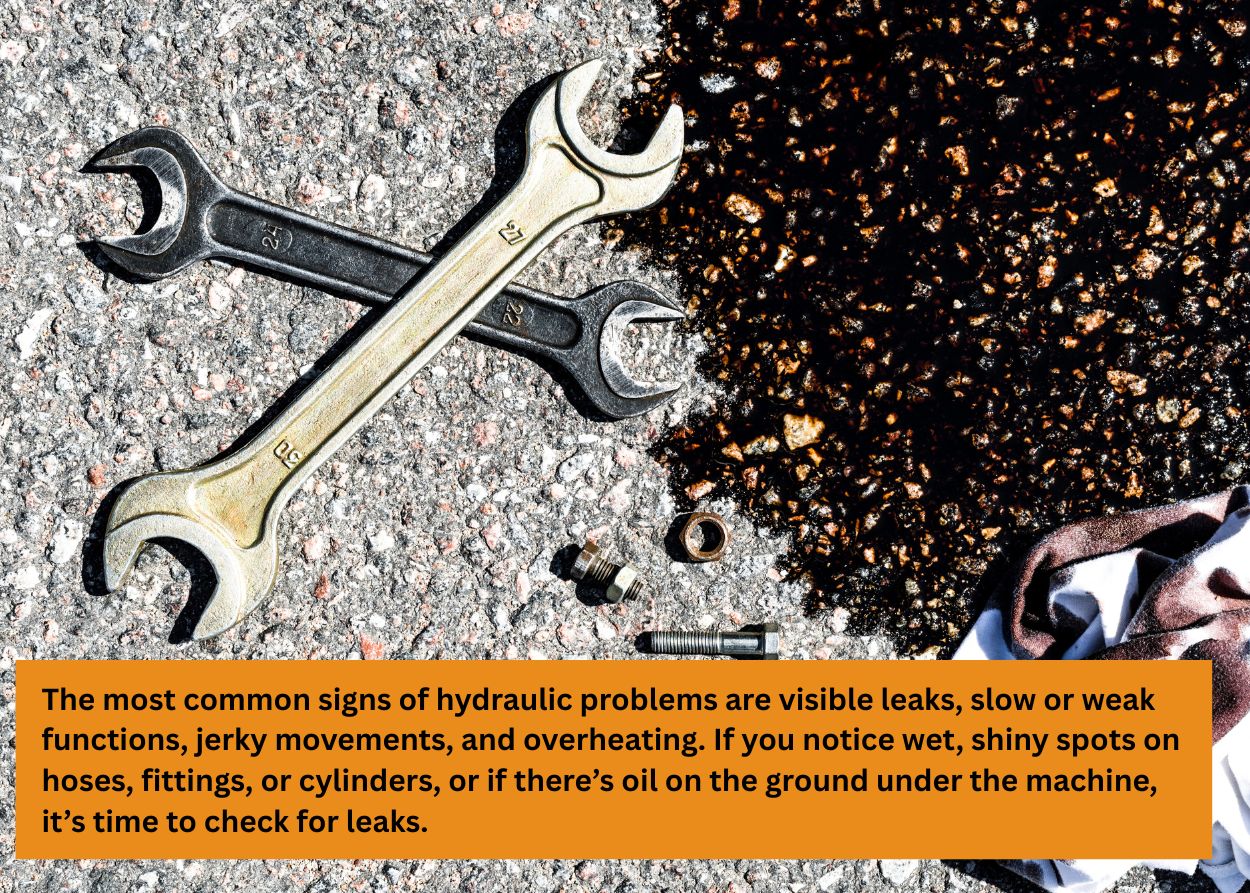
The most common signs of hydraulic problems are visible leaks, slow or weak functions, jerky movements, and overheating. If you notice wet, shiny spots on hoses, fittings, or cylinders, or if there’s oil on the ground under the machine, it’s time to check for leaks. Additionally, a drop in hydraulic oil levels or sluggish operation could indicate trouble with the fluid or seals.
When the boom, stick, or bucket moves more slowly than normal or struggles to lift loads it used to handle easily, your hydraulic system may be underperforming. Similarly, if you notice jerky or uneven movement, or the machine drifts when you’re trying to hold a position, it’s often a sign of internal leakage in a cylinder or valve. Overheating is another red flag. If the tank or hoses feel too hot to touch for more than a second or if warning lights appear, your system is working harder than it should.
The good news? Catching leaks and sluggish controls early often means simple repairs, such as replacing seals, hoses, or filters, instead of full component replacements.
6 Clues Your Tracks and Undercarriage Need Attention
Your mini excavator’s undercarriage quietly eats your budget if you ignore it. On tracked machines, the undercarriage can account for up to half of total maintenance or operating costs.
Here are key signs it’s time to service or replace track components:
- Cracked or chunked rubber tracks, missing lugs, exposed cords inside the track, or deep cuts across the tread.
- “Snaky” or uneven track appearance as the machine moves, or tracks that don’t run straight.
- Worn sprockets; teeth that look sharp, “hooked,” or like shark fins; or tracks that slip or jump under power.
- Tracks that keep loosening even after you adjust tension, are still loose even when adjusters are almost fully extended, or derail in mud or when turning sharply.
- Noise that changes with direction, or a grinding, popping, or clunking sound while tracking.
- Flat spots, metal-on-metal shine, leaking oil from rollers, or idlers that sit crooked or not in line with the track.
Think of your undercarriage like your truck’s tires plus suspension. If you let it run worn and loose, you’ll end up paying for it later, often with extra costs.
7 Engine and Fuel System Red Flags
Your engine is the heart of the mini excavator. When it’s unhappy, the whole machine feels tired.
Watch for these warning signs:
- Long cranking, especially in cool weather, or needing ether or lots of throttle to fire
- Excessive smoke: white smoke means unburned fuel, low compression, or cold-start issues; blue smoke means burning oil; black smoke means too much fuel or not enough air.
- Noticeable loss of power under load, struggling to track up a hill, or feeling “gutless” compared to how it used to run.
- Rough idle or surging: RPMs constantly hunting up and down, or the engine shaking more than normal.
- Higher fuel use than normal, which is often tied to dirty filters, injector issues, or compression problems.
- Wet spots around lines or injectors, or a strong diesel smell around the machine after shutdown.
- Warning lights or codes: engine lights on the display or overheat alarms when working in normal conditions.
Engines rarely fail “out of nowhere.” They whisper first—then they shout.
5 Electrical Symptoms That Point to Trouble
Modern mini excavators rely on sensors, wiring, and control modules just as much as they do on steel and hoses.
Here are electrical issues that need attention:
- Intermittent controls: If the joysticks cut out or the boom or travel suddenly stops responding, then comes back on its own, you're likely dealing with an electrical issue.
- Random shutdowns or no-start: If your machine dies when you hit a bump or starts fine one minute but then nothing the next, this points to an electrical problem.
- Blown fuses… again: If the same circuit repeatedly blows, it often indicates chafed wires or failing components.
- Dead or flickering gauges, especially for fuel or temperature readings or warning lights that come and go for no obvious reason, are another indicator of electrical trouble.
- Rodent or abrasion damage: Chewed insulation or wires rubbed bare where they pass over frame edges can also cause an electrical malfunction.

Electrical issues can be frustrating because they come and go. But if you log when they happen and what you were doing, a good technician can usually find the cause.
Noises, Smoke, and Vibration: What They’re Trying to Tell You
Machines talk. Not with words—but with sound, smell, and feel. High-pitched whines from hydraulic pumps or motors usually mean there is cavitation or air in the system, which can cause long-term damage if not fixed. Knocking or grinding sounds when the boom or swing moves might point to a problem with the bearings or swing motor. Unusual smells, such as burning oil, rubber, or electrical odors, should also be taken seriously.
Increased vibration, especially in the seat or controls, is another sign that something’s wrong. More vibration than usual, or changes in vibration as you move the machine, mean parts are failing. Any persistent smoke, especially from the engine bay, track areas, or final drives, should be addressed right away. Any smoke, plus noise and heat, is a stop now situation.
If something suddenly sounds, smells, or feels different, don’t shrug it off. Small changes often point to bearings, pumps, or drives that are about to fail.
When To Park It and Call for Repairs
So… when is it OK to “get through the day,” and when should you park it immediately?
Here’s a simple rule of thumb:
- See major hydraulic leaks? Stop.
- Hoses rubbed almost through? Stop.
- Smell burning electrical or see smoke from the engine? Stop.
- Tracks keep derailing? Stop.
You can usually finish the job if there’s a minor leak at a fitting; the controls feel a bit slower than normal; the tracks show moderate wear, but are still holding tension; or an occasional warning light appears but goes away, and you’ve checked fluid levels.
When in doubt, remember this: It’s cheaper to tow a machine than to rebuild it.
5 Simple Daily Checks to Catch Problems Early
The best way to avoid big repair bills? A 5-minute daily routine before you climb in the cab.
Many OEM and dealer checklists recommend a pre-operation walkaround for mini excavators that includes visual inspection, fluids, and controls.
Here’s a simple version you can use:
- Walkaround leak check: Look under the machine for fresh oil, coolant, or fuel. Inspect cylinders, hoses, and fittings for wet spots.
- Tracks and undercarriage: Look for cuts, missing lugs, or exposed cords in rubber tracks. Check sprockets, rollers, and idlers for obvious wear or damage.
- Fluid levels and filters: Check engine oil, hydraulic oil, and coolant. Visually check fuel, air, and hydraulic filters for dirt or damage.
- Pins, bushings, and attachments: Check quick couplers, thumb, and bucket pins for play. Look for cracks at welds and high-stress points. Make sure attachment locking mechanisms are fully engaged.
- Controls and gauges: Start the machine and test all functions at low speed. Confirm warning lights come on at startup and go off normally. Listen for new noises while operating each function.
Doing these checks is like brushing your teeth. It only takes a few minutes, but if you skip it long enough, you’ll end up with a much bigger repair bill.
How Jonestown Ag Supply Helps Keep You Working
At Jonestown Ag Supply, we work every day with farmers, contractors, landscapers, and small business owners who depend on compact equipment like mini excavators, skid steers, compact tractors, and more to keep their work moving.
Here’s how we can help when you spot the signs your mini excavator needs repairs:
- Hydraulic troubleshooting and repair, cylinder resealing, hose replacement, engine service, and undercarriage adjustments.
- Parts and hard-to-find components: We stock seals, filters, fluids, and wear parts for a wide range of equipment. We sell hardware and shop supplies so you can do your own repairs when it makes sense.
- Support for your whole fleet: we sell truck beds and service bodies so your tools and parts are organized for how you actually work.
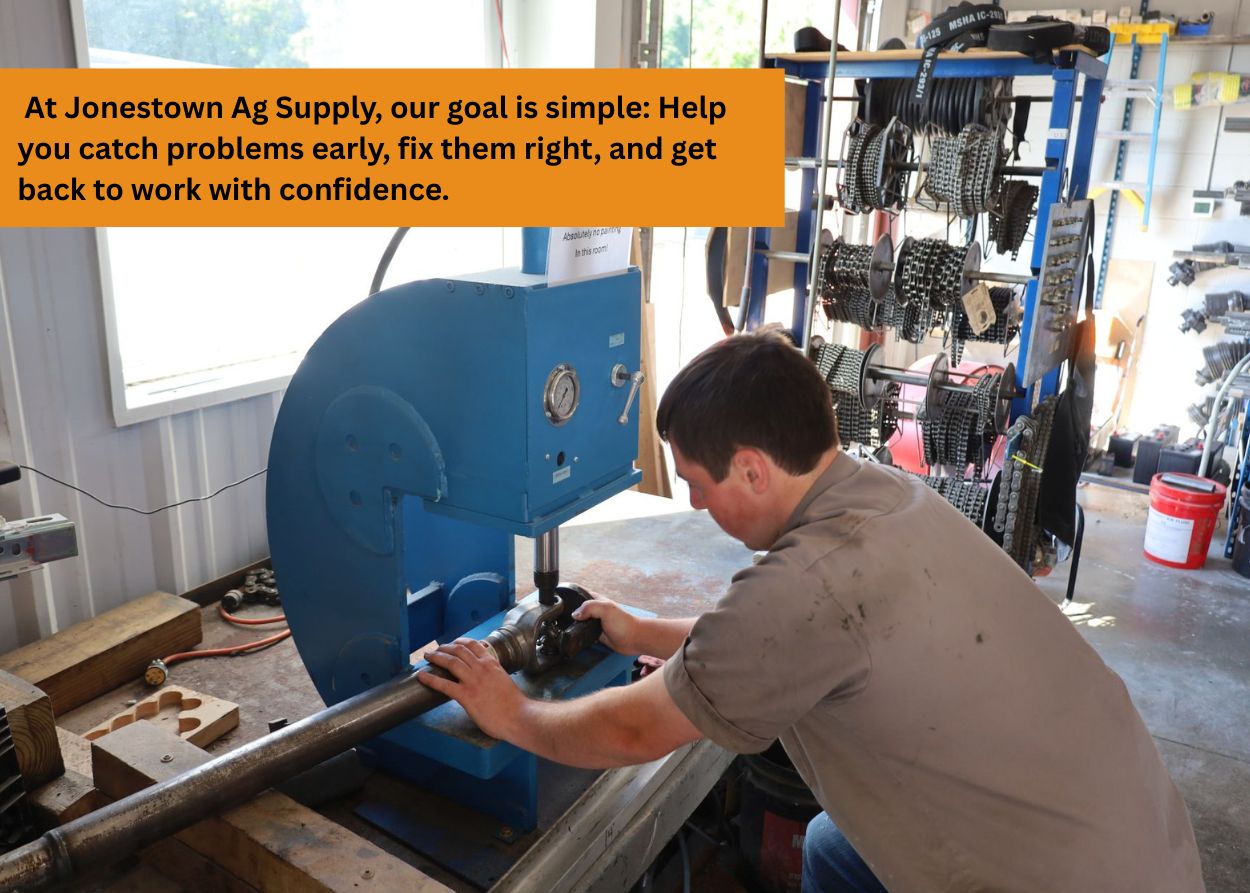
Our goal is simple: Help you catch problems early, fix them right, and get back to work with confidence.
Reach out to Jonestown Ag Supply or stop by the shop, and let’s talk about what you’re noticing. We’ll help you decide if it’s a quick fix, a scheduled repair, or something that needs immediate attention, so your equipment keeps working as hard as you do.
