
Skid Steer & Compact Tractor Repairs: Reduce Downtime. Extend Machine Life.
Skid steer and compact tractor repairs are not optional—they’re what keep your crew moving. When a machine goes down, you feel it fast: missed deadlines, idle crews, lost jobs. The stakes are high.
The good news? Most failures whisper before they shout. A small leak. A slow lift. A hot-running engine. Catch those early and you cut downtime—simple as that.
At Jonestown Ag Supply, we know you depend on your equipment every day. With over 25 years of experience, skilled technicians, and a wide range of in-stock parts, we handle everything from hydraulics to electrical issues. Our mission is simple: provide fast, honest repairs to keep your machines working.
Here’s what you’ll get in this guide: quick checks you can do in minutes, ways to practice preventative maintenance, and clear advice on when to DIY and when to call a pro.
Ready to reduce downtime and extend machine life? Let’s get started by taking a closer look at the most common repair issues and how you can spot them early.
Table of Contents








TL;DR — Skid Steer & Compact Tractor Repairs
- Downtime is expensive. Missed deadlines. Idle crews. Lost jobs.
- Most failures start small. Leaks, sluggish lift, hot-running engines—fix early, save big.
- Do the dailies. 90-second walkaround: leaks, hoses, pins, tracks/tires, debris.
- Stick to intervals. Fluids and filters on schedule = fewer surprises.
- Manual wins. Always. Keep a printed copy in the cab and a PDF on your phone. Defer to it for specs, intervals, and safety.
- DIY vs. pro. DIY: fluids, filters, greasing, cooler cleanouts. Pro: cylinder rebuilds, pump/motor issues, final drives, complex electrical.
- Safety first. Lockout/tagout. Support raised arms. PPE.
DIY vs. Pro: Where to Draw the Line
There are some tasks you can confidently tackle yourself, while others are best left to a pro. Here's the breakdown:
DIY:
DIY tasks you can handle confidently include changing engine oil and filters, replacing fuel and air filters, swapping batteries, greasing pins and bushings, and blowing out coolers or radiators. You can also visually inspect machine components, check track tension, and monitor tire pressure. These are generally safe for most operators with basic mechanical skills.
Call a pro:
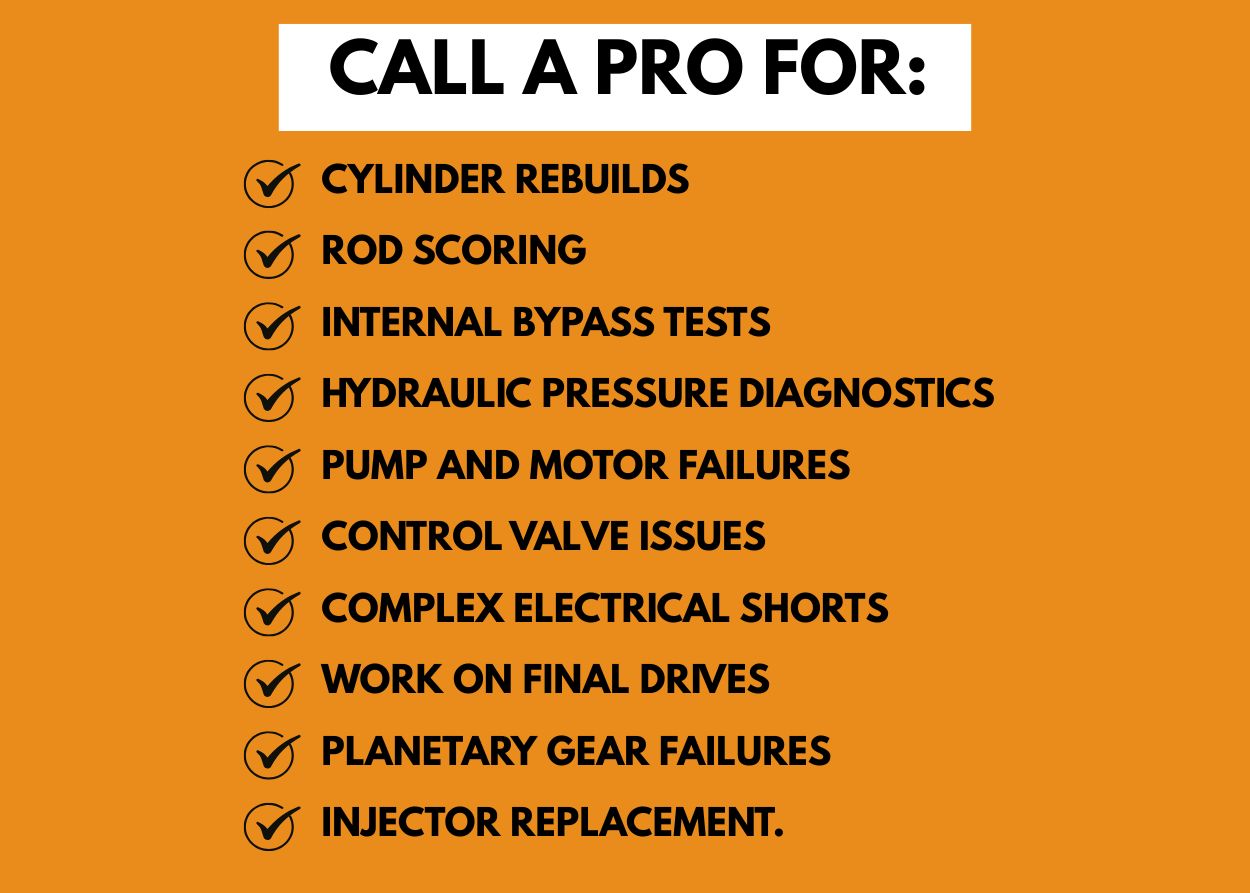
Call a pro for cylinder rebuilds, rod scoring, internal bypass tests, and hydraulic pressure diagnostics; for pump and motor failures, control valve issues, or complex electrical shorts; and for work on final drives, planetary gear failures, and injector replacement.
Safety note: Before you perform any service, always follow lockout/tagout (LOTO) procedures to relieve stored hydraulic energy. OSHA’s LOTO standard provides more guidance on controlling hazardous energy during repairs.
9 Common Skid Steer & Compact Tractor Repair Issues
Catching problems early is the cheapest way to keep your machine earning. Tiny clues—little leaks, new noises, slow responses—often show up long before a breakdown. This section walks through the 9 most common issues and the warning signs to watch for, so you can fix small problems before they become big, expensive ones.
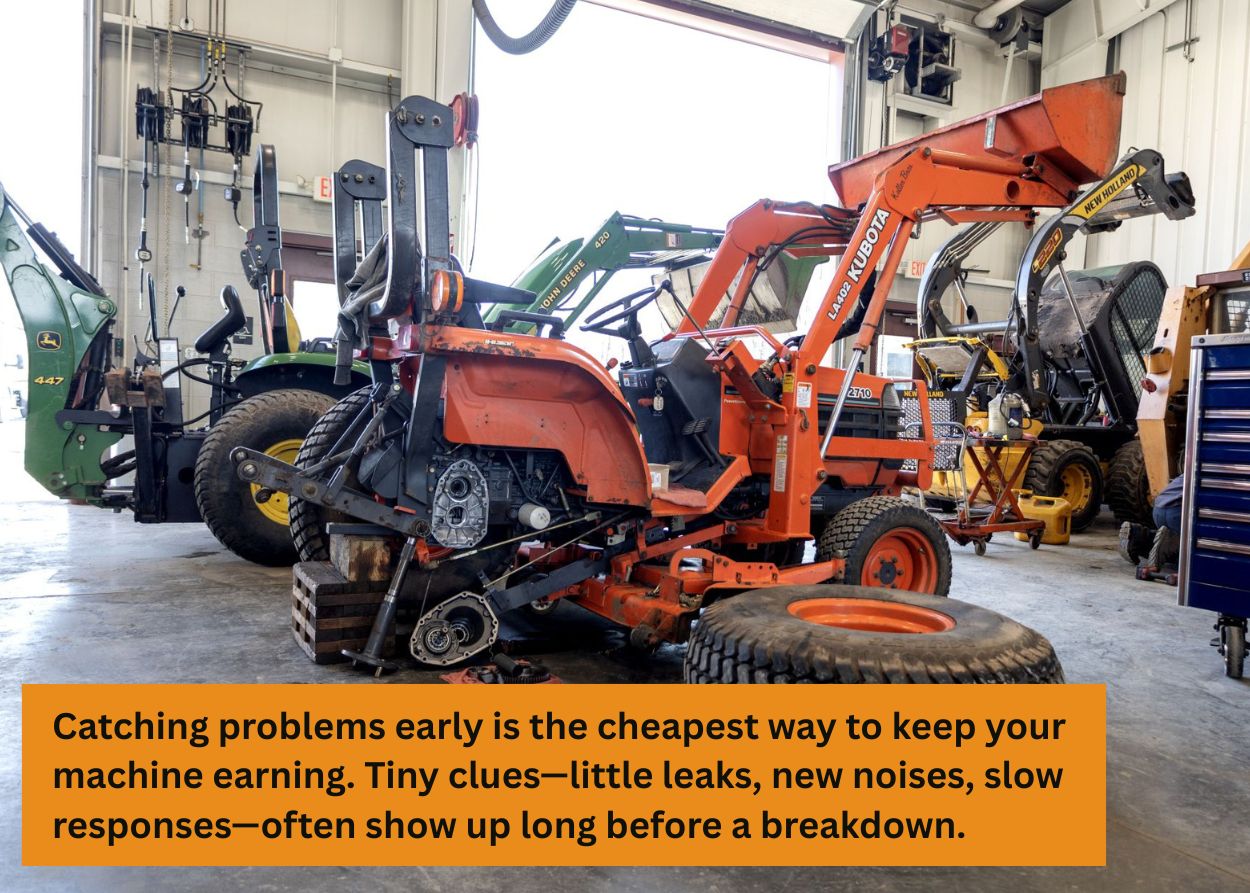
Leaks, weak lift, cylinder drift, and jerky motion often stem from contamination, heat, or seal wear. These issues are more common than you think, but are easy to avoid with regular fluid checks and consistent filter changes.
-
Drive & traction
Final drives, wheel motors, axle seals, and track tension need attention. Ignoring that squeal or slack? It’ll lead to bigger bills down the line.
-
Electrical gremlins
Dead batteries, faulty alternators, corroded connectors, and bad grounds. Start by checking the basics—worn-out parts or bad connections are often the cause.
-
Cooling system
Clogged cores, tired thermostats, and weak water pumps can all affect performance. Blow out your radiator and oil cooler regularly to avoid overheating.
-
Fuel system
Clogged filters, air in lines, and injector wear quickly snowball into bigger issues. Keep your fuel system clean, and dirty fuel won’t lead to breakdowns later.
-
Engine wear items
Belts, hoses, filters, and glow plugs/ignition parts are cheap to replace but expensive to neglect. Stay on top of these small tasks to keep your machine running smoothly.
-
Hydraulic hoses & fittings
Hydraulic hoses can suffer from abrasion, age cracking, and improper routing.
-
PTO & auxiliary couplers
Weeping, weak engagement, and contamination are common problems with PTO couplers. Keep caps on and couplers clean to ensure smooth operation.
-
Frames, pins, bushings, and attachments
Bent pins, worn bushings, and cracked welds can quickly throw off performance. Grease your pins on schedule and check attachment hardware torque regularly to prevent these issues.
Early Warning Signs You Should Never Ignore
If you pay attention, your machine often provides warning signs before a complete breakdown. Be on the lookout for the following:
- Fresh oil trails or clean paths in grime: Indicates a leak.
- Slow or uneven lift/curl: Could be aerated fluid or internal bypass.
- Odd noises: Squeal, chatter, or cavitation under load signal trouble.
- Erratic controls: Jerky motion, delay, or fade usually point to failing hydraulics or electronics.
- Overheating during normal work: Often caused by clogged coolers or contamination. Both are preventable with regular maintenance.
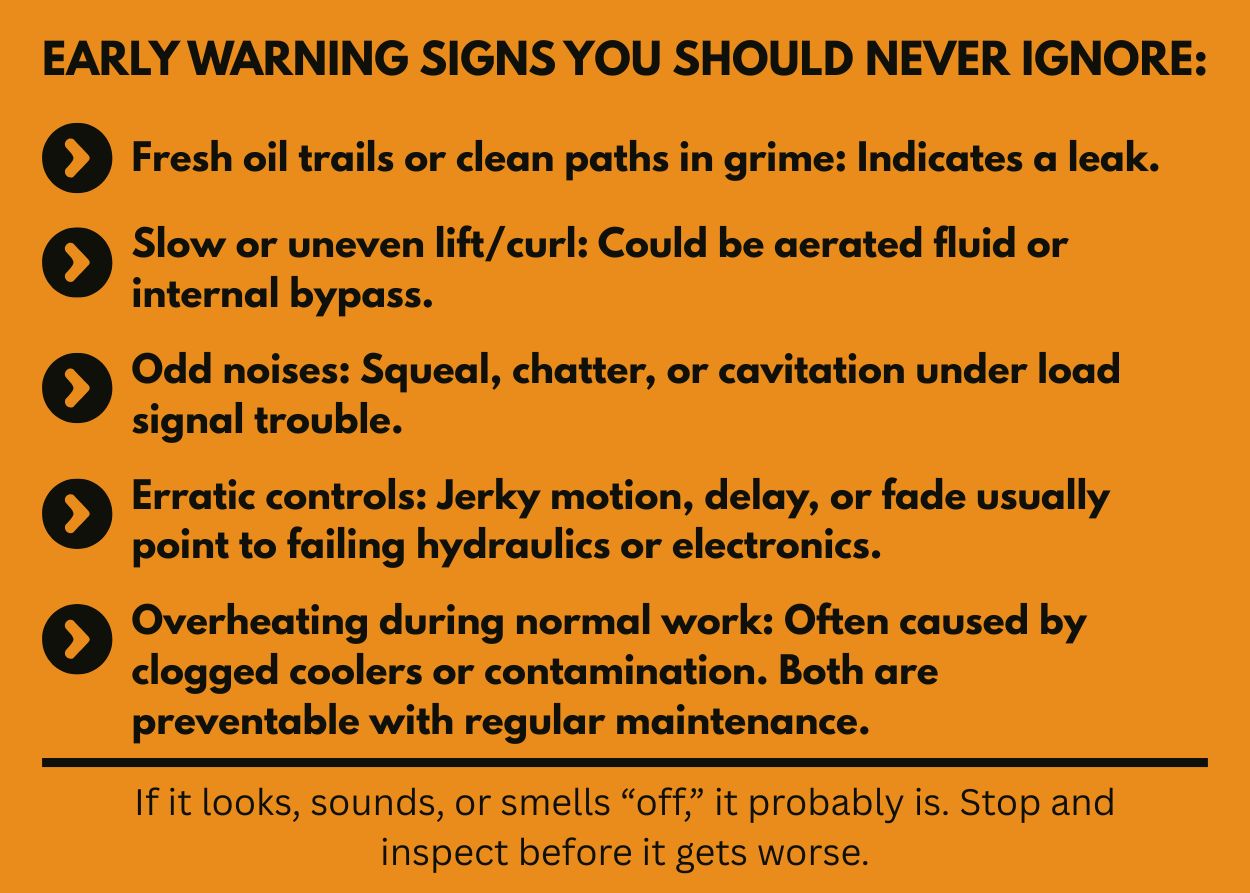
If it looks, sounds, or smells “off,” it probably is. Stop and inspect before it gets worse.
Preventive Maintenance: 12 Practical Tips To Reduce Downtime
The best way to avoid repairs is by practicing proactive maintenance. Here’s how to extend the life of your equipment:
- Daily 90-second walkaround: Look for leaks, loose fasteners, track/tire issues, and debris buildup.
- Check the level of your machine’s fluids and change them on time. Use the right fluid specs and change on time. Refer to your model’s manual for guidance.
- Replace your filters on schedule: This includes engine oil, fuel, air (primary + safety), and hydraulic filters. Dirty filters steal power and reduce efficiency.
- Keep it cool: Blow out radiators/oil coolers regularly and monitor temperatures under load.
- Grease schedule: Grease pins and bushings at the OEM interval; more frequently in muddy or rainy conditions.
- Hose routing & protection: Add abrasion sleeves and adjust clamps to prevent rub-through.
- Seal attention: Replace weeping cylinder and axle seals early to avoid metal damage.
- Torque checks: Check lug nuts, attachment bolts, and battery clamps to prevent vibration-related issues.
- Attachment sanity check: Confirm quick-attach latching, case drain lines, and coupler caps are functioning properly.
- Store smart: Keep your equipment clean, dry, and covered. Protect connectors from moisture and dust.
- Operator training: Smooth controls, correct warm-up, and no overloading can reduce heat and wear.
- Maintenance log: Track maintenance dates and engine hours. A log helps you spot patterns and take action early.
Always Use Your Owner’s Manual (Give It the Last Say)
Your owner’s manual is not just a guide; it is the rulebook for your machine. It details hour-based maintenance intervals, fluid specifications, torque settings, and safety procedures specific to your model. Always rely on your manual over generic online advice. Keep a printed copy in the cab or truck and a digital copy on your phone for easy access.
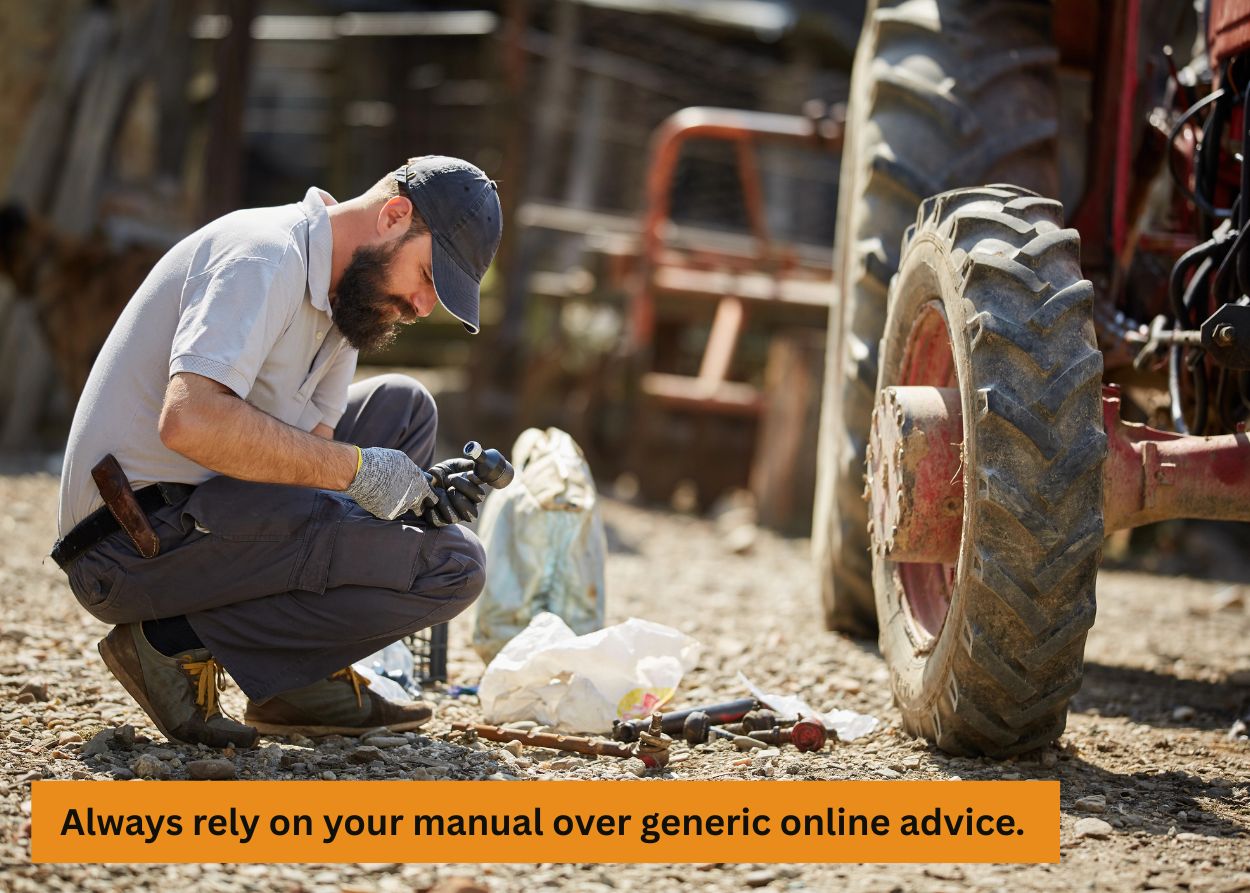
Using the manufacturer’s guidelines helps protect your machine—and your wallet.
Bottom line: Always keep your manual nearby and trust its instructions for all repairs and maintenance.
Safety First—Always
Before performing any repair or maintenance, make sure you are following proper safety procedures:
- Lockout/Tagout (LOTO): Follow OSHA guidelines to control hazardous energy.
- Support raised loads: Use approved stands—never trust hydraulics alone.
- Wear proper PPE: Gloves, eye protection, hearing protection, and steel-toe boots are a must.
- Clean up spills immediately—hydraulic oil is slippery.
Following written procedures, wearing the right PPE, and staying disciplined about safety protocols isn’t just smart—it’s essential to avoid unnecessary risks. By prioritizing safety, you protect yourself, your team, and your equipment from costly mistakes and potential harm. Always work with the mindset that safety isn’t optional—it’s a requirement for getting the job done right and keeping everyone on the job site safe.
Smart Parts & Upgrades That Cut Headaches
Investing in quality parts now saves you significant headaches down the road:
- Hydraulic hoses, seals, and couplers: Stick with OEM-spec parts to prevent leaks and improve uptime.
- Protective add-ons: Debris screens and belly-pan hardware you can easily remove for cleaning.
- Service bodies and truck beds: Keep your tools and parts organized for fast field repairs. Jonestown Ag offers service body solutions to help with that.
FAQs (Quick Answers People Actually Search)
“Why does my lift get weak after 20 minutes?”
This is often caused by heat or aeration in the fluid. Check your cooler, fluid level, and filter condition as per the manual.
“Can I run ‘universal’ hydraulic fluid?”
Stick to the exact spec listed in your owner’s manual. Using the wrong fluid can cause foaming, seal damage, and costly repairs.
“How often should I change hydraulic filters?”
Follow the hourly intervals specified for your model. Increase frequency if you work in dusty or wet environments.
Your Central PA Repair Partner: Jonestown Ag Supply
Here’s a reality check: in the construction and heavy-equipment world, unplanned downtime of 20–30% per year per machine is typical—and that translates directly to lost revenue, idle crews, and job delays.
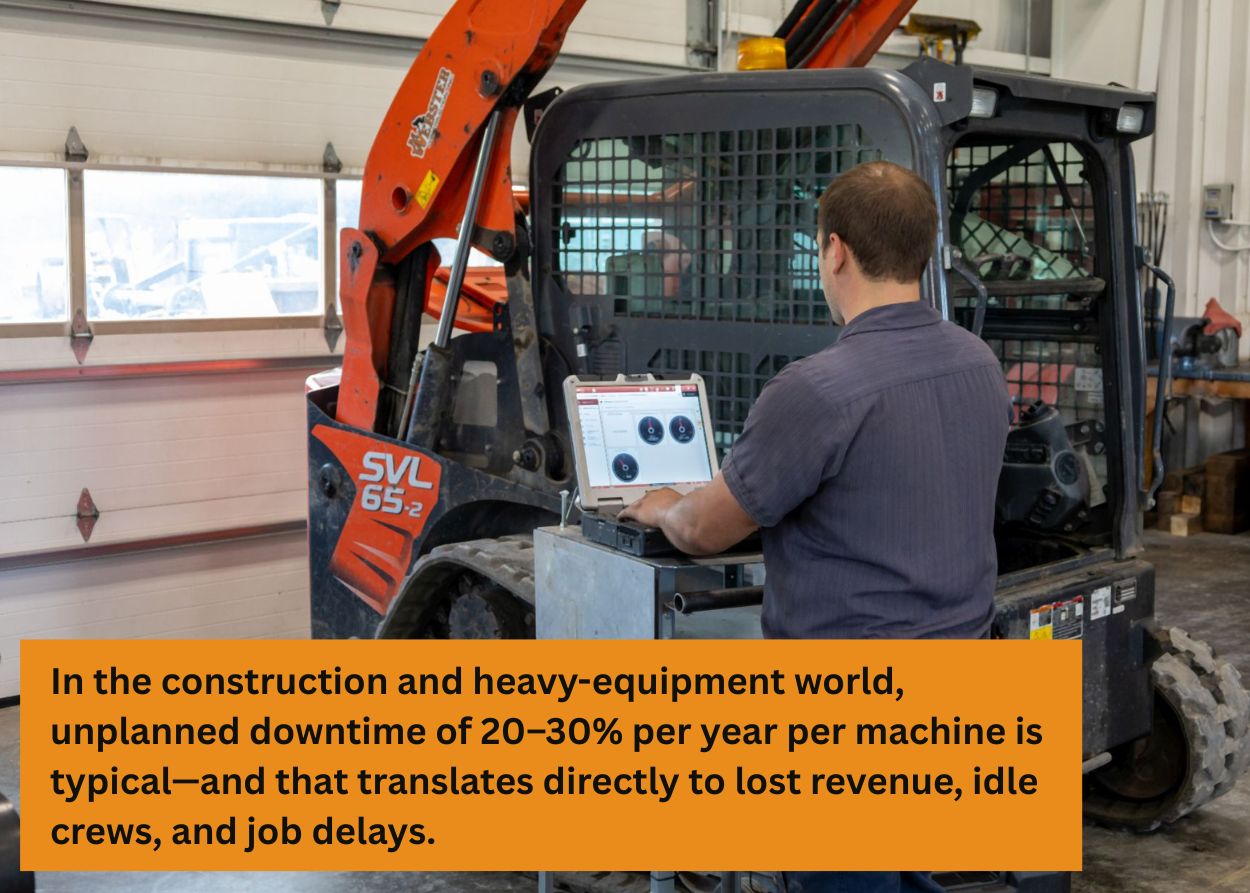
Jonestown Ag Supply offers hydraulic diagnostics and cylinder repairs with over 25 years of expertise. We stock parts and provide knowledgeable, family-owned service.
Need help getting back on track? Stop by Jonestown Ag Supply or call 717-865-0135 to schedule service. We’ll help you reduce downtime and extend machine life—so your team keeps working, and your jobs stay on schedule.
We’ve also written other blogs you might find helpful, including:
